When people shop for a commercial generator, they usually start with the obvious questions.
- How many kilowatts do I need?
- Is it diesel or natural gas?
- Is it 480V 3-phase?
- How many hours are on it?
- What does it cost?
Those are important questions, but there is one question that can matter even more:
Is the generator rated for standby, prime, or continuous duty?
That rating tells you how the generator was designed to be used. It affects runtime, load expectations, fuel planning, emissions compliance, maintenance, and long-term reliability.
A generator that is perfect for emergency backup may not be the right machine for daily operation. A generator built for prime power may be a better fit for rental, construction, mining, oilfield, or remote-site power. A continuous-duty unit may be the right choice for operations that need steady power for long periods without depending on the utility grid.
This is where many buyers get tripped up.
They see a clean generator at the right price and focus only on the kW rating. But a 1000kW standby generator is not automatically the same thing as a 1000kW prime power generator. The number may look similar, but the intended use can be very different.
Caterpillar defines multiple generator-set rating categories, including standby, prime, and continuous, and notes that choosing the right rating depends on the application, annual runtime, load type, and whether the generator will operate isolated from or in parallel with the utility.
What Is a Standby Generator?
A standby generator is designed for emergency backup power.
This is the generator that sits ready while utility power is available. When the grid goes down, the generator starts and carries the load until utility power returns.
Standby generators are commonly used for:
- Supermarkets
- Cold storage facilities
- Office buildings
- Hospitals
- Data centers
- Warehouses
- Retail centers
- Schools
- Manufacturing plants
- Commercial buildings
- Emergency backup systems
The key point is this:
A standby generator is not meant to be the main source of power every day.
It is there for outages, emergencies, and backup situations.
For example, a supermarket may only need the generator when the grid fails. But when that outage happens, the generator becomes the difference between protecting refrigerated inventory and losing tens of thousands of dollars in product.
That is the strength of a standby unit. It does not need to run every day. It needs to be ready when the business cannot afford to lose power.
When Standby Power Makes Sense
A standby-rated generator is usually the right choice when the business has reliable utility power but needs protection against outages.
Common standby applications include:
- Backup power for refrigeration
- Backup power for freezers and walk-in coolers
- Backup power for emergency lighting
- Backup power for HVAC
- Backup power for security systems
- Backup power for servers and IT equipment
- Backup power for pumps and controls
- Backup power for fire/life safety systems
This is where a unit like ARC Power Systems’ 2016 Caterpillar C32 1000kW Tier 2 Diesel Generator Set fits the conversation. It is a large commercial diesel generator package listed by ARC as a low-hour 1000kW unit, making it the type of machine commercial buyers may consider for serious facility backup power.
A standby generator can be a strong fit when the buyer’s main concern is:
“When the power goes out, I need my business protected.”
What Is a Prime Power Generator?
A prime power generator is designed for longer operating hours under variable load.
This is different from standby power.
A prime-rated generator is commonly used where utility power is not available, not reliable, or not practical for the job site.
Prime power is commonly used for:
- Construction sites
- Mining operations
- Oil and gas sites
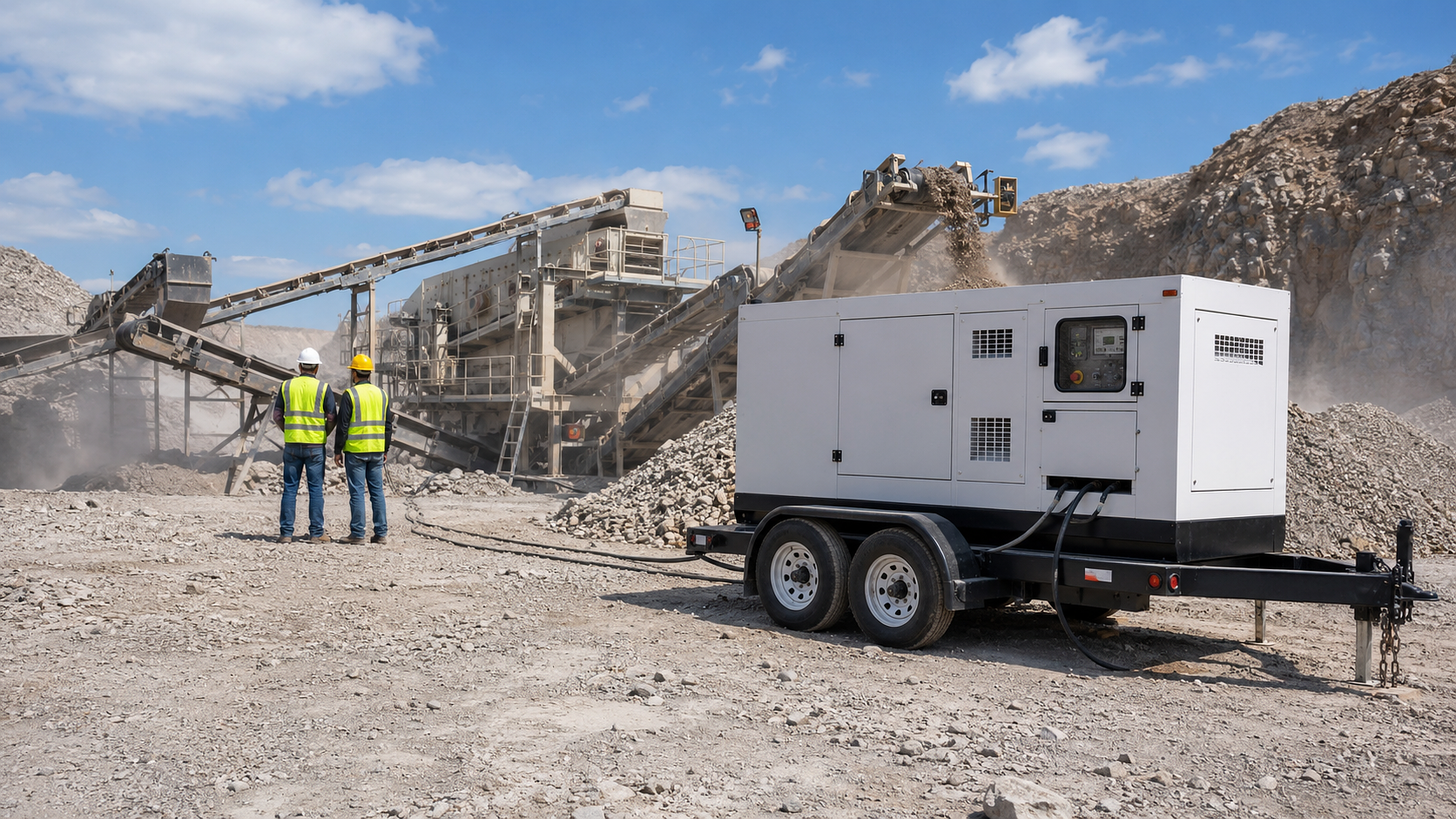
- Rock crushing and screening plants
- Aggregate operations
- Remote industrial sites
- Temporary power projects
- Rental power fleets
- Events and mobile operations
- Agricultural processing
- Emergency utility support
- Sites waiting on permanent electrical service
The simple way to think about it:
Standby power backs up the utility. Prime power replaces or supplements the utility.
A prime generator is built for longer use, changing loads, and real working conditions. It may run for long shifts, multiple days, or extended project timelines.
That does not mean it should be abused. It still needs proper maintenance, load management, fuel quality, and service intervals. But it is generally better suited for extended operation than a standby-only generator.
When Prime Power Makes Sense
Prime power makes sense when the generator is expected to be part of the normal power plan, not just emergency backup.
A quarry running crushers and screeners at a remote location may need prime power.
A construction site before utility service is installed may need prime power.
An oilfield operation running pumps, lights, controls, and support equipment may need prime power.
A rental-grade towable generator may be built specifically for this kind of use.
A good example is ARC Power Systems’ 2019 Caterpillar XQ570 455kW Prime Tier 4 Final CARB Towable Generator Sets. ARC’s listing describes these units as 455kW / 569kVA prime-rated, rental-grade, towable diesel generator sets with Tier 4 Final and California CARB certification.
That is exactly the kind of listing a buyer should look at when the application calls for mobile, prime-rated commercial power instead of a fixed emergency standby unit.
A prime generator is usually the better fit when the buyer’s main concern is:
“I need reliable power to run the job, not just emergency backup.”
What Is a Continuous Generator?
A continuous-rated generator is designed for long-term operation at a consistent load.
This is the heaviest-duty category of the three.
Continuous generators are typically used where the load is steady and the generator may be expected to operate for extended periods as a primary power source.
Continuous-duty applications may include:
- Industrial base-load power
- Remote power plants
- Large natural gas generator installations
- Behind-the-meter power
- Utility support
- Power generation facilities
- Islanded power systems
- Large industrial sites with steady demand
The main difference is load behavior.
Prime power is usually for variable loads.
Continuous power is usually for steady loads.
A continuous-rated generator is not just “a generator that can run a long time.” It is a generator rated for a specific kind of long-duration duty cycle.
ARC has listed examples of continuous-duty equipment, including a Caterpillar G3512 750kW natural gas generator set described as 750kW / 937kVA continuous, and a Waukesha L36GLD 600kW natural gas generator set described for heavy-duty continuous base-load applications.
Continuous power usually makes sense when the buyer’s main concern is:
“I need a generator designed for steady, long-term power production.”
The Mistake Buyers Make
The most common mistake is buying a generator based only on the kW rating.
A buyer may say:
“I need around 500kW. This generator is 500kW, so it should work.”
Not necessarily.
You still need to ask:
- Is it standby, prime, or continuous rated?
- How many hours per year will it run?
- Will it run only during outages?
- Will it run every day?
- Is the load steady or variable?
- Will large motors start and stop?
- Is the voltage correct?
- Is the emissions certification correct for the application?
- Is it legal for emergency use only, or can it be used for non-emergency operation?
- Does the site need diesel, natural gas, or another fuel?
- Does the generator have the right enclosure, tank, breaker, and controls?
A generator can be excellent equipment and still be wrong for the application.
That is the point buyers need to understand.
Can a Standby Generator Be Used for Prime Power?
Sometimes buyers ask:
“Can I use a standby generator as a prime generator?”
The safe answer is: Do not assume that you can.
A standby generator is designed around emergency use. It may not be rated, permitted, or practical for daily operation.
Using a standby generator for prime power can create problems such as:
- Excessive wear
- Overheating risk
- Higher maintenance demand
- Warranty issues
- Emissions compliance problems
- Fuel consumption issues
- Shortened equipment life
- Operating outside the intended rating
That does not mean a standby generator is weak. It means it has a different job.
A fire truck is not a freight truck.
A freight truck is not a race car.
A race car is not a city bus.
Each one can be powerful, but each one is built for a different job.
Generators work the same way.
Can a Prime Generator Be Used for Standby Power?
In many cases, a prime-rated generator can be used in a standby application if the voltage, controls, switchgear, emissions rules, fuel system, and installation setup make sense.
But the buyer still needs to confirm the full package.
A prime-rated towable generator may be excellent for jobsite power, but that does not automatically mean it is the best permanent standby solution for a building. It may need different connection equipment, transfer switch compatibility, fuel planning, sound control, and site layout review.
Again, the rating is only one part of the decision.
The full application matters.
Can a Continuous Generator Be Used for Standby or Prime?
A continuous-rated generator may be capable of long-duration use, but that does not automatically make it the best choice for every standby or prime application.
Continuous units are often selected for steady loads. If the application has highly variable load swings, frequent motor starts, or emergency-only use, another rating may make more sense.
Continuous-duty equipment can be excellent for the right buyer, especially in natural gas, industrial, and base-load applications. But it should still be matched carefully to the project.
Why the Rating Affects Emissions and Permitting
Generator rating and intended use can affect emissions compliance.
This is especially important for diesel generators.
A generator used only for emergency standby may fall under different rules than a generator used for prime power, rental power, demand response, or daily operation.
Before buying, commercial buyers should confirm:
- EPA Tier rating
- CARB status, if applicable
- Emergency vs non-emergency use
- Local air district requirements
- Runtime limits
- Fuel type
- Engine year
- Site location
- Whether the generator will be stationary or mobile
This matters because a generator can be mechanically correct but still be wrong for the permitting environment.
For example, a Tier 2 diesel generator may be suitable for certain emergency standby applications in some locations, while a Tier 4 Final unit may be required for other non-emergency or mobile applications.
Do not guess on emissions. Verify before purchase.
How to Choose the Right Rating
Here is the simplest way to narrow it down.
Choose standby if:
- You have utility power.
- You need protection during outages.
- The generator will only run during emergencies and scheduled testing.
- Your main concern is business continuity.
Best fit:
Supermarkets, cold storage, commercial buildings, hospitals, warehouses, data centers, and backup power systems.
Choose prime if:
- Utility power is unavailable, unreliable, or temporary.
- The generator will run for extended periods.
- The load will vary throughout operation.
- You need mobile, rental, construction, industrial, or remote-site power.
Best fit:
Construction, aggregate, quarry, mining, oilfield, rental fleets, temporary power, and remote industrial sites.
Choose continuous if:
- The generator will carry a steady load for long periods.
- You need base-load or long-term power production.
- The application is more like a power plant than emergency backup.
- The load profile is predictable and consistent.
Best fit:
Industrial base-load, natural gas generation, remote facilities, utility support, and behind-the-meter power.
Final Answer: What Is the Difference Between Standby, Prime, and Continuous Generators?
A standby generator is built for emergency backup when utility power fails.
A prime power generator is built for extended operation where utility power is unavailable, unreliable, or temporary.
A continuous generator is built for long-term operation under a steady load.
That is the core difference.
The right choice depends on how the generator will actually be used.
Not just the kW.
Not just the price.
Not just the brand.
Not just the hours.
The rating must match the real application.
ARC Power Systems Can Help You Choose the Right Generator Rating
We help commercial and industrial buyers match the right generator to the right application.
Whether you need a standby generator for business backup, a prime power generator for remote jobsite use, or a continuous-duty generator for long-term industrial power, the first step is understanding how the generator will actually be used.
We can help review:
- Standby vs prime vs continuous rating
- kW and kVA requirements
- Voltage and phase
- Fuel type
- Runtime needs
- Emissions requirements
- Load profile
- Enclosure type
- Fuel tank setup
- ATS and switchgear compatibility
- Shipping and load-out requirements
Before buying a generator, make sure the rating fits the job.
Use ARC Power Systems’ Power Match Tool or contact our team with your voltage, load, fuel, runtime, and application details.
The right generator protects your business.
The wrong one creates another problem to solve.
📞 Call or Text: (213) 371-2848
📧 Email: sales@arcpowersystems.com
standby vs prime generator
standby vs prime vs continuous generator
commercial generator ratings
industrial generator ratings
standby generator
prime power generator
continuous generator
commercial backup generator
industrial backup generator
diesel generator ratings
generator duty rating
used commercial generator
used industrial generator
standby generator for business
prime generator for construction
generator for aggregate operations
generator for quarry
generator for mining
generator for oilfield
Tier 4 Final generator
Tier 2 diesel generator
commercial diesel generator
natural gas generator
ARC Power Systems