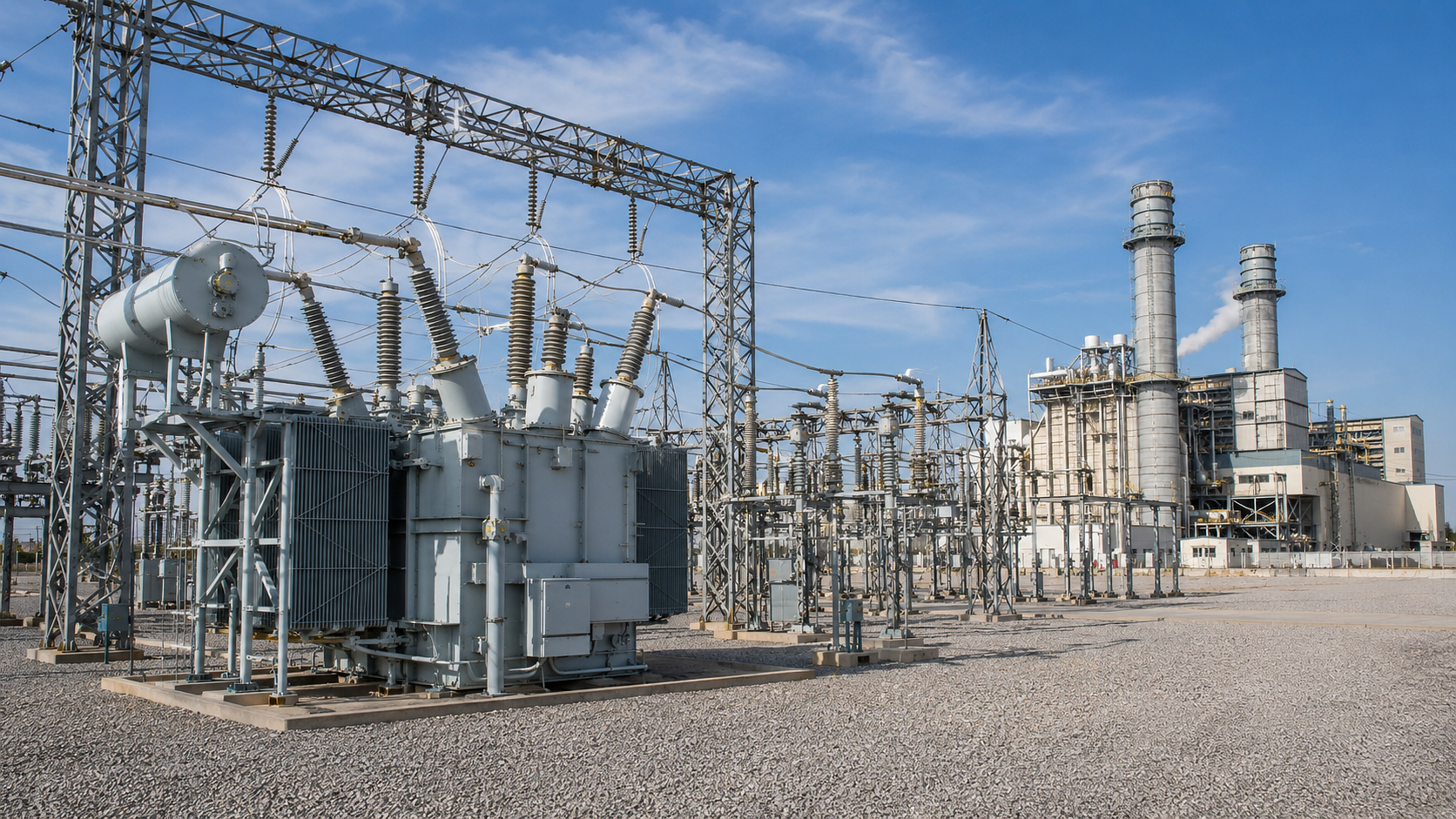
Power equipment has always been valued by the obvious things: megawatts, voltage, operating hours, condition, service history and how quickly it can be put to work.
On August 26, 2026, another variable moved to the front of the line: provenance.
President Donald Trump signed an executive order declaring a national emergency over foreign involvement in the United States bulk-power system. The order creates a process for the Department of Energy to prohibit certain acquisitions, imports, transfers and installations of foreign-produced power equipment when that equipment is connected to a covered foreign entity and presents an undue or unacceptable national-security risk.
That is not the same as a blanket ban on every Chinese-made generator, transformer or electrical component.
It is, however, a meaningful policy shift, and the commercial direction is hard to miss. Equipment already positioned in the United States—especially equipment with a clear origin, documented ownership, known controls and domestic service support—may become more valuable as buyers work to reduce import exposure, compliance uncertainty and project delays.
What the August 26 Executive Order Actually Does
The new order is an executive action, not an act passed by Congress.
It applies to transactions initiated after August 26, 2026, and targets foreign-produced bulk-power system electric equipment when the Secretary of Energy determines that two conditions are present.
First, the equipment—or an associated critical component, software, firmware, digital service, maintenance service or remote-access capability—must be designed, developed, manufactured or supplied by parties connected to a covered foreign entity.
Second, the transaction must create an undue risk of sabotage, unauthorized access, malicious remote action, supply disruption, catastrophic infrastructure effects or another unacceptable national-security risk.
The order also reaches backward in an important way.
For covered equipment acquired or installed before August 26, the Department of Energy may impose conditions on its continued operation, maintenance, servicing or updating. Those conditions could include identifying, isolating, monitoring, securing, disconnecting, replacing or removing equipment.
Before ordering disconnection, replacement or removal, the Department must consider reliability, safety, replacement availability and continuity of essential service.
The Department of Energy has up to 120 days to publish implementing rules or regulations as needed. That means the market is entering a rulemaking and risk-screening period—not waking up to a simple universal import prohibition.
Official executive order:
Is This Really About China?
China is not directly named in the executive order’s operative definition of a covered foreign entity.
The definition instead reaches countries and persons connected to governments subject to a U.S. arms embargo or sanctions regime, as well as additional parties later identified by the Secretary of Energy.
China is currently listed under 22 C.F.R. 126.1 as a country subject to a U.S. arms-embargo policy of denial. That places Chinese-controlled and Chinese-jurisdiction suppliers squarely within the order’s potential reach.
The practical result is more nuanced than the headline “Chinese power equipment banned.”
A transaction becomes prohibited when the required foreign-entity connection and government risk determination are present. The government may also establish prequalified equipment or vendor criteria, approve mitigation measures, license otherwise prohibited transactions, and identify particular countries, suppliers or equipment categories for additional scrutiny.
For buyers, sellers, utilities and developers, the appropriate response is not panic. It is disciplined documentation.
What Equipment Could Fall Within the Order?
The order uses a broad equipment list. It covers equipment used in bulk-power substations, control rooms and generating stations, including:
- Large, small and backup generators
- Generation turbines
- Substation and other transformers
- High-voltage circuit breakers
- Protective relays, metering and voltage-regulation equipment
- Industrial control systems
- Programmable logic controllers
- Intelligent electronic devices
- Distributed control and safety-instrumented systems
- Grid-connected inverters
- Battery energy storage systems
- Certain uninterruptible power systems supporting critical infrastructure
- Associated software, firmware, remote access, digital services and lifecycle maintenance dependencies
The definition of the bulk-power system includes transmission facilities rated at 69 kV or higher, but the equipment list extends into generating stations and critical-support systems.
At the same time, the order expressly excludes products that are not on its equipment list or that have broader uses outside the bulk-power system unrelated to the identified national-security concerns.
That distinction matters.
A generator does not necessarily become covered merely because it produces electricity. Its intended use, grid connection, location within the power system, control architecture, critical-infrastructure role and supply chain all matter.
Project-specific legal, cybersecurity and engineering review will become increasingly important as the Department of Energy issues its implementing rules.
Why Equipment Already in the United States Could Gain Value
The United States was already dealing with a strained power-equipment supply chain before this order was signed.
The Department of Energy reported in August 2026 that critical grid components can carry lead times of two years or more and that some transformer prices had increased four to nine times over five years.
NERC previously reported an average transformer lead time of approximately 120 weeks during 2024, with large power transformers ranging from 80 to 210 weeks.
Now place a new security and compliance screen on top of that market.
If the pool of acceptable overseas vendors narrows, buyers may compete harder for equipment that is already onshore, available for inspection and supported by a traceable supply chain.
The strongest assets will not merely be “located in America.” They will have the paperwork and technical history to prove exactly what they are.
That could create what the market begins treating as a domestic-availability premium.
This premium is most likely to attach to equipment with:
- A clearly identified OEM, model and country of manufacture or assembly
- Nameplates, bills of sale, invoices and a documented ownership trail
- Test reports, maintenance records, drawings and manuals
- Known controllers, relays, PLCs, firmware and remote-access configurations
- U.S.-based parts, service and technical support
- A defined scope with all major components accounted for
- Immediate or near-term availability for inspection and delivery
This does not guarantee that every U.S.-located generator, turbine or transformer will increase in value.
It does mean that certainty has become more valuable.
In a market where a project can lose months waiting for factory capacity, customs clearance, security review or replacement components, documented equipment already within the country can protect more than a purchasing schedule. It can protect the entire project sequence behind it.
The Market May Split in Two
The likely outcome is not a single price increase across every equipment category.
It is a wider separation between clean, documentable assets and uncertain ones.
On one side will be equipment with known origin, established service channels, accessible controls, complete records and a credible path to deployment. Those packages may attract more qualified buyers, sell faster and command stronger terms.
On the other side will be equipment with incomplete nameplate data, missing ownership records, unknown control-system content, unsupported firmware, foreign remote-service dependencies or unclear component origin.
Even if that equipment is physically inside the United States, buyers may demand expanded due diligence, larger contingencies, lower pricing or a contractual right to terminate the transaction. Some projects may reject the equipment altogether.
China-origin equipment may face an especially uneven market.
Equipment used outside the order’s scope may remain commercially viable. Equipment intended for a bulk-power or critical-infrastructure application may face added review, mitigation requirements or transaction risk.
Previously installed equipment may also become subject to monitoring, security conditions or eventual replacement if the Department of Energy makes the required findings.
The phrase “already in the USA” is valuable, but it is not enough by itself.
Rising Demand Makes Availability More Important
This policy change is arriving while U.S. electricity demand is accelerating.
The U.S. Energy Information Administration forecast in January 2026 that national electricity use would grow 1% in 2026 and 3% in 2027, marking the strongest four-year growth period since 2000. EIA identified large computing facilities, including data centers, as the principal driver.
That demand reaches far beyond generating capacity.
New data centers, advanced manufacturing plants, defense facilities and industrial campuses need transformers, switchgear, circuit breakers, controls, backup generation and, in some cases, dedicated prime or bridge power.
Every delayed transformer or rejected controls package can hold up the equipment and construction work downstream.
More demand, long production queues and a smaller pool of lower-risk foreign supply create a familiar result: buyers place a higher value on time.
Equipment that can be inspected now, documented now and engineered into a project now may compete against the full cost of waiting—not merely the price printed on a new-equipment quotation.
What Buyers Should Verify Before Making an Offer
The new order makes equipment due diligence more important, not less.
Before committing funds, a serious buyer should establish:
- Origin and supply chain. Identify where the complete package and its critical components were manufactured, produced or assembled. Do not rely on the location of the seller’s yard.
- Controls and remote access. Inventory the DCS, PLCs, relays, intelligent electronic devices, firmware, software licenses, cloud services, modem connections and remote-maintenance accounts.
- Ownership and transaction history. Confirm title, liens, prior transfers, import records and the date the current transaction was initiated.
- Intended application. Determine whether the equipment will serve the bulk-power system, a generating station, a critical facility, a behind-the-meter load or a broader commercial use outside the order’s scope.
- Technical records. Collect nameplate photographs, one-line diagrams, test reports, maintenance history, manuals, alarm logs and available cybersecurity documentation.
- Serviceability. Confirm who can support the equipment, whether replacement parts and software updates are available, and whether servicing requires access by a covered foreign supplier.
- Project fit. Verify voltage, frequency, fuel, duty rating, emissions, protection, interconnection, cooling and site requirements. Secure provenance does not make the wrong machine suitable for the project.
Sellers should begin assembling the same file before taking equipment to market.
A complete documentation package can shorten the sales cycle and reduce the discount buyers apply to uncertainty.
The Opportunity for U.S.-Based Surplus Equipment
The order reinforces a point experienced power-equipment buyers already understand: a well-documented surplus asset can solve a schedule problem that a factory order cannot.
ARC Power Systems works with industrial generators, gas turbines, transformers and complete power-generation packages across the United States and international markets.
We help qualified buyers examine equipment scope, records, condition, controls, serviceability, transaction structure and logistics before the project loses time chasing an incomplete or unsuitable opportunity.
Review ARC’s current power-equipment inventory:
https://www.arcpowersystems.com/listings
Industrial generators:
https://www.arcpowersystems.com/generators
Data-center generator options:
https://www.arcpowersystems.com/generators/data-center-generators
Gas turbine opportunities:
https://www.arcpowersystems.com/turbines/gas-turbines
If the required equipment is not publicly listed, submit the project through ARC PowerMatch:
https://www.arcpowersystems.com/pages/use-our-powermatch-tool
Some of the strongest opportunities never reach the open market. All inventory is subject to prior sale.
Frequently Asked Questions
Did President Trump ban all Chinese-made power equipment?
No. The August 26 order is not an automatic blanket ban on every Chinese-made power product.
It authorizes prohibitions when foreign-produced bulk-power equipment is tied to a covered foreign entity and the Department of Energy determines that the transaction presents one of the specified risks.
Can the order affect equipment installed before August 26, 2026?
Yes.
The Department of Energy may impose conditions on continued use, servicing, updating or operation of covered existing equipment. These conditions could include monitoring, securing, isolation, disconnection, replacement or removal.
Reliability, safety and continuity of service must be considered before the most disruptive measures are ordered.
Is every standby generator covered?
No.
The order lists backup and small generators, but coverage depends on whether the equipment is used in the bulk-power system, a generating station, a covered control environment or a critical-infrastructure context.
Equipment with unrelated broader commercial uses may fall outside the order.
Does being located in the United States make equipment compliant?
No.
Physical location does not establish origin, vendor control, software content or security risk. Buyers should document where the complete package and critical components came from and how the controls are accessed and supported.
Will used generator, turbine and transformer prices increase?
Some categories may strengthen, especially documented equipment that is already onshore and ready for inspection.
The effect will vary according to origin, intended application, technical fit, condition, serviceability, documentation and the Department of Energy’s implementing rules.
Contact ARC Power Systems
The next phase of the power-equipment market will reward buyers who can move quickly without skipping provenance, controls and documentation.
If you are planning a data center, industrial power project, utility upgrade, microgrid or large equipment acquisition, contact ARC Power Systems to discuss equipment already available in the United States and other qualified sourcing channels.
Email: sales@arcpowersystems.com
Call or Text: (213) 371-2848
Contact ARC: https://www.arcpowersystems.com/pages/contact-us
This article provides general market information and is not a legal determination that any specific equipment or transaction is permitted or prohibited.
RELATING TO: Trump bulk-power order, U.S. power equipment, Chinese power equipment restrictions, industrial generators, gas turbines, power transformers, grid security, data center power, critical infrastructure, domestic power equipment, generator availability, transformer lead times