There was a time when data centers were discussed like real estate projects.
Find the land. Design the building. Secure the fiber. Bring in the servers. Connect to the utility.
That world is gone.
Today, the data center conversation starts with one question before almost anything else:
Where is the power coming from?
Not someday power. Not theoretical power. Not power promised after years of studies, upgrades, queues, tariff reviews, transmission planning, transformer procurement, and utility coordination.
Real power.
Power that can be permitted, delivered, connected, backed up, dispatched, and trusted.
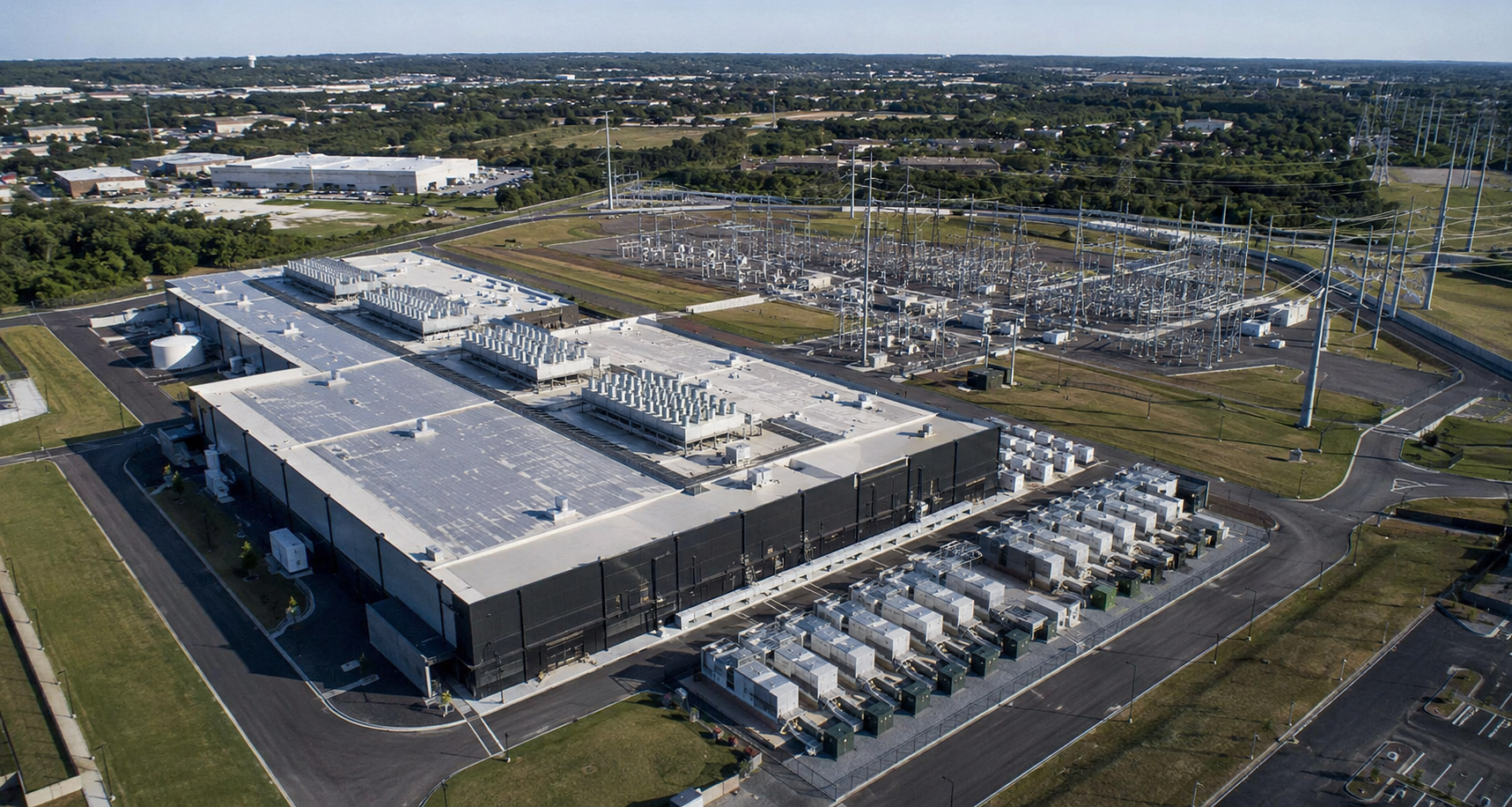
The artificial intelligence boom has changed the entire power conversation. Data centers are no longer just buildings full of servers. They are industrial-scale electrical loads. In some markets, they are becoming the equivalent of new cities appearing on the grid almost overnight.
And the grid was not built for that pace.
At ARC Power Systems, we see this problem from the equipment side every day. Developers, data center groups, industrial buyers, utilities, EPC contractors, electrical contractors, and power buyers are all trying to solve the same problem:
They need power faster than the traditional grid can provide it.
That is why large-scale power generation equipment is becoming one of the most important assets in the modern industrial economy.
The New Bottleneck Is Power
For years, the limiting factor in technology growth was compute.
Then it was chips.
Then it was land, cooling, fiber, and construction capacity.
Now the bottleneck is power.
The market is learning a hard lesson: a data center without electricity is just an expensive shell.
A site can have land. It can have financing. It can have demand from hyperscale tenants. It can have design drawings, fiber routes, political support, and a signed development plan.
But if the project cannot get enough power, at the right voltage, on the right timeline, the project stalls.
That is the reality playing out across the United States.
Utilities are being asked to serve loads they did not forecast at this speed. Grid operators are rewriting rules for large-load interconnection. Data center developers are exploring on-site generation, co-located power plants, gas-fired generation, nuclear agreements, battery storage, and temporary bridge power.
The power conversation has moved from the back of the project file to the front of the boardroom.
The Grid Is Not “Broken.” It Is Being Overtaken.
It would be too simple to say the grid is broken.
The real issue is more complicated.
The grid was built over decades. Data center demand is scaling in years.
Transmission upgrades do not happen quickly. New substations do not appear overnight. Transformers are not always sitting on shelves. Gas turbines, generator sets, switchgear, controls, breakers, and utility-grade electrical equipment all require planning, capital, lead time, and technical coordination.
This is why the current power shortage feels different.
It is not just a fuel problem.
It is not just a generation problem.
It is not just a transmission problem.
It is an entire infrastructure timing problem.
AI data centers are asking for massive, concentrated blocks of electricity in specific locations. The grid can support growth, but not always exactly where developers want it, exactly when they want it, and at the exact scale they are requesting.
That gap between ambition and available power is where projects begin to lose time.
And in today’s market, time is not a small detail. Time is the deal.
Data Centers Are Becoming Power Projects
The smartest data center developers are no longer treating power as a utility paperwork item.
They are treating power as a core project strategy.
That means asking harder questions earlier:
- Can this site actually get the power it needs?
- How long is the interconnection process?
- Is there existing generation nearby?
- Is behind-the-meter generation possible?
- Can natural gas generation support bridge power?
- Can turbines, generators, transformers, and switchgear be sourced faster than new equipment?
- Can the project operate in phases?
- Is temporary generation needed before permanent utility service is ready?
- Can the facility ride through grid disturbances without disconnecting?
- What assets are real, available, documented, and inspectable today?
This is where the conversation becomes practical.
A data center does not need buzzwords. It needs megawatts.
A developer does not need another vague equipment listing. It needs real assets, clear scope, verified availability, and a path to execution.
That is where ARC Power Systems fits into the market.
ARC Power Systems Helps Buyers Get Directly in Front of Real Power Assets
The industrial power market is crowded with noise.
There are listings that are outdated. There are brokers reposting equipment they do not control. There are incomplete packages missing major components. There are turbines without clear removal plans. There are generators without proper documentation. There are transformers with unclear test history. There are assets advertised as available that may already be sold, stripped, or tied up.
For serious buyers, that noise is expensive.
ARC Power Systems helps clients sort through the weeds and get directly in front of real industrial power generation equipment.
That includes:
- gas turbines
- diesel generator sets
- natural gas generators
- mobile power modules
- standby generators
- prime power generators
- continuous-duty generators
- transformers
- power plant equipment
- switchgear
- breakers
- controls
- fuel systems
- load banks
- balance-of-plant equipment
- complete power generation asset packages
The goal is simple:
Help buyers find power assets that are real, relevant, and worth their time.
Why Used and Surplus Power Equipment Matters Now
New equipment will always have its place.
But in a market where power demand is moving faster than the grid can build, used and surplus power generation equipment can become a strategic advantage.
A properly selected used generator, gas turbine, transformer, or power plant asset can help a buyer reduce lead time, support temporary power, build bridge capacity, back up critical operations, or create a phased path to energization.
That matters for:
- data centers
- AI infrastructure projects
- industrial manufacturing
- mining and aggregate operations
- oil and gas facilities
- cold storage
- hospitals
- utilities
- municipalities
- independent power producers
- EPC contractors
- emergency response planning
- international power projects
The key is not simply buying used equipment.
The key is buying the right used equipment.
A turbine may look attractive until the buyer understands the removal cost. A generator may look inexpensive until it fails the emissions requirement. A transformer may look perfect until the voltage does not match the site. A mobile generator may be useful for one project and completely wrong for another.
ARC helps buyers slow down enough to ask the right technical questions, while still moving fast enough to capture good assets before they disappear.
Power Assets Are Becoming Strategic Infrastructure
Power equipment used to be viewed as support equipment.
That thinking is changing.
A large generator package, turbine set, or transformer is no longer just a piece of equipment sitting behind a building. In this market, it can be the difference between a project moving forward or sitting idle.
For data center developers, the ability to secure generation can influence site selection, tenant commitments, project financing, construction schedules, and operational planning.
For industrial users, it can protect production.
For utilities and power producers, it can create new capacity options.
For international buyers, it can open the door to repowering and relocation opportunities.
Power generation assets are now strategic infrastructure.
That is why serious buyers are looking at available equipment differently.
Current ARC Power Systems Listings Relevant to the Power Demand Surge
ARC Power Systems is positioned in the exact part of the market where demand is increasing: real industrial power equipment that can be reviewed, inspected, purchased, relocated, and deployed.
For utility-scale and large private power applications, ARC has listed 2 x Westinghouse 501B 73 MW dual-fuel gas turbines. These are large-frame gas turbine generator assets suited for power generation projects, repowering opportunities, and large-load strategies where serious megawatt capacity matters.
For natural gas generation and data center bridge power, ARC has listed CAT G3520 natural gas generators. These 2.6MW continuous-rated units are the type of assets buyers are studying closely as the market shifts toward on-site and behind-the-meter power strategies.
For modern diesel power, ARC has listed 2022 Cummins 1000DQFAH 1000kW Tier 4 Final diesel generators, offering late-model industrial diesel generation for buyers that need cleaner, emissions-compliant power.
For larger diesel generation needs, ARC has listed 2022 Cummins QSK50-G8 1500kW Tier 4 Final generator sets.
For standby and commercial backup power, ARC has listed a 2016 Caterpillar C32 1000kW diesel generator set, a low-hour industrial standby package for facilities needing dependable backup generation.
For mobile and temporary power applications, ARC also offers equipment such as 2019 Caterpillar XQ570 455kW Tier 4 Final CARB towable generators, Doosan G570 456kW prime towable diesel generators, and additional mobile generator assets for construction, quarry, utility, and industrial temporary power needs.
These are the kinds of power assets buyers need to be looking at now, not after their utility schedule slips.
The Human Side of the Power Shortage
It is easy to talk about this market in numbers.
Megawatts. Gigawatts. Kilovolts. Load growth. Interconnection queues. Demand forecasts. Capacity auctions. Transformer lead times.
But behind every power problem is a human problem.
A developer has a project team waiting for direction.
An electrical contractor is trying to keep a schedule intact.
A plant manager is trying to protect production.
A hospital cannot afford downtime.
A cold storage operator cannot risk losing inventory.
A data center team is under pressure to deliver capacity in a race where every month matters.
A utility planner is trying to balance reliability, affordability, and new demand that keeps arriving faster than expected.
This is not just a grid story. It is a business continuity story.
It is a story about projects that either move or do not move.
It is a story about whether companies can build, manufacture, compute, store, cool, process, and operate when power becomes the limiting factor.
At ARC Power Systems, we understand that the buyer on the other end of the call is not just asking for a generator. They are usually trying to solve a much bigger problem.
The Wrong Equipment Can Be as Dangerous as No Equipment
In a tight market, there is pressure to move fast.
That pressure can create mistakes.
A buyer may chase the first available generator without confirming voltage. A developer may assume a turbine package includes all the major equipment needed for relocation. A contractor may underestimate logistics. A facility may buy a unit that does not meet the emissions requirement. A project may fail to account for transformers, switchgear, fuel supply, controls, or paralleling.
That is how a power solution becomes another problem.
ARC helps buyers evaluate equipment more carefully before committing capital.
Important questions include:
- What is the true rating: standby, prime, or continuous?
- What voltage and frequency is the equipment configured for?
- What fuel does it use?
- What emissions tier applies?
- Are controls, breakers, and generator ends included?
- Is the equipment load tested?
- Are manuals, drawings, and service records available?
- What is the removal and loadout scope?
- Can the equipment be transported economically?
- Does it match the buyer’s actual site requirement?
- Is the seller in control of the asset?
These questions matter because power equipment is not a commodity purchase. It is a technical asset purchase.
The Buyers Who Win Will Plan Power Earlier
The old project sequence was simple:
Develop the site, then solve power.
That sequence is becoming dangerous.
The better sequence is now:
Solve power first.
That does not always mean buying equipment immediately. It means understanding the available paths early enough to make intelligent decisions.
For data center developers, that may mean comparing utility service, co-located generation, temporary bridge power, natural gas generation, turbine assets, diesel backup, battery storage, and phased energization.
For industrial buyers, it may mean securing standby or prime generation before the facility expansion is complete.
For utilities and power producers, it may mean evaluating existing generation assets that can support new demand faster than ground-up development.
For international buyers, it may mean identifying U.S. surplus power assets that can be relocated into markets where power demand is rising.
The buyer who waits until the last minute may have fewer choices, higher costs, and weaker leverage.
The buyer who plans early has options.
Use PowerMatch to Start the Conversation
Not every buyer knows exactly what equipment they need.
Some know their load but not the generator size.
Some know they need megawatts but not whether diesel, natural gas, or turbine power makes sense.
Some know they need temporary power until the utility is ready.
Some know they need backup power but do not know whether standby, prime, or continuous-rated equipment applies.
That is why ARC Power Systems built the PowerMatch Tool.
It gives buyers a practical starting point to narrow down the type of generator or power asset that may fit their project.
From there, ARC can help evaluate available inventory, technical requirements, documentation, logistics, and next steps.
Related ARC Power Systems Listings
Utility-Scale and Large Power Assets
- 2 x Westinghouse 501B 73 MW Dual-Fuel Gas Turbines
- CAT G3520 Natural Gas Generators for Sale | 2.6MW Each | Up to 26MW Available
Large Diesel Generator Assets
- 2022 Cummins 1000DQFAH 1000kW Tier 4 Final Diesel Generators
- 2022 Cummins QSK50-G8 1500kW Tier 4 Final Generator Sets
- 2016 Caterpillar C32 1000kW Tier 2 Diesel Generator Set
- 2015 Atlas Copco QAC1200 1000kW Tier 2 Diesel Generator Set
- Cummins 800kW DFJB Diesel Generator Set
Natural Gas Generator Assets
Mobile, Towable, and Temporary Power
- 2019 Caterpillar XQ570 455kW Prime Tier 4 Final CARB Towable Generator Sets
- Doosan G570 456kW Prime Towable Diesel Generator Set
- 2017 MultiQuip DCA220 176kW Prime Tier 4 Final CARB-Certified Towable Generator
Browse all available equipment here: ARC Power Systems Industrial Generator Inventory
Final Word: The Race for AI Is Becoming a Race for Power
The future of AI will not be decided only by chips, software, or data.
It will also be decided by substations, transformers, turbines, generators, switchgear, fuel supply, interconnection strategy, and the ability to secure real megawatts in the real world.
That is the part of the story many people are just beginning to understand.
The grid will expand. Utilities will adapt. New rules will be written. New generation will be built.
But projects are moving now.
Buyers who need power cannot afford to wait until every long-term solution is complete. They need practical options, available equipment, and clear guidance.
ARC Power Systems helps bridge that gap.
If your project needs power, whether for a data center, industrial facility, utility project, manufacturing plant, quarry, hospital, or large private power development, start the conversation before the bottleneck becomes the emergency.
Call ARC Power Systems: (213) 371-2848
Email: sales@arcpowersystems.com
Browse inventory: ARC Power Systems Listings
Use PowerMatch: Find the Right Generator or Power Asset